Tuesday, October 25, 2022

“The Worst is Yet to Come”— Recession 2023 andthe Looming Uncertainty

Recession 2023 is just around the corner. The global economic crises are now inducing the certainty of a looming recession. Economists and financial organizations warned of upcoming uncertainty; however, regrettably, the world failed to decode the uprising of the economic catastrophe. 

Today’s economies around the globe are confronting an urgent economic crisis and are on the brink of a recession. And, the experts fear the worst is yet to come!

Shear Impact on Leading Economies – US, UK, China, and India

“Global growth is slowing sharply, with further slowing likely as more countries fall into recession. My deep concern is that these trends will persist, with long-lasting consequences devastating for people in emerging markets and developing economies”  

WORLD BANK GROUP PRESIDENT DAVID MALPASS

For the first time since 2009, the US declared negative GDP growth two quarters in a row, which officially qualifies as a recession.

The British Pound is at its historic low of $1.038 against US dollars due to rare emergency interventions. Cities and states in China are still in lockdown because of a rise in Covid-19 cases. On the other hand, Indian Rupee is at its 75-year low of Rupees 82.11 against the US dollar, soaring the hike in repo rates to 5.90%. 

Srilanka already declared insolvency earlier this year. Russia and Ukraine war had already set the stage for World War III. And the recent resilience of china on Taiwan has tarnished the world economic environment. 

All these together indicate the harsh truth: Recession 2023 will worsen the conditions of all major economies and push the globe into undefined circumstances like:

  • Central banks hiking the interest rates
  • Hike in energy and food prices
  • Depreciation of major currencies against the dollar

Central Banks Hiking the Interest Rates  

To counteract rising inflation and the impact of a strong currency on the economies, central banks are hurriedly raising interest rates. This happens as the US Federal Reserve keeps up its aggressive interest rate hikes.

On the other hand Reserve Bank of India is also struggling with persistently high inflation, which is made worse by geopolitical unrest, droughts, and supply-chain disruptions. 

Hike in Energy and Food Prices

Russia is the world’s third-largest oil-producing country. It provides 7-8 million barrels of crude oil per day, or 14% of global production, to international markets. 

The US and UK’s restrictions and many other nations’ decisions to stop purchasing Russian petroleum have exacerbated the crisis.

Russia and Ukraine are the biggest sunflower oil producers globally and the second most frequently used cooking oil. However, sunflower oil cannot yet be exported from Russia due to the tightening of import restrictions. 

Plus, due to the increasing demand for sunflower oil in the market, other edible oils are now more expensive, raising the cost of food and other products across borders.

Depreciation of Major Currencies Against the US Dollar 

Compared to the US dollar, the Japanese yen has dropped to its lowest level since August 1998. The Indian rupee is hitting its lowest in history, and for the first time in 20 years, the euro is now lower than the USD.

The decline of major currencies indicates the current state of the global economy. Moreover, it provides a crystal-clear forecast of how disastrous the recession 2023 would be if significant steps are not taken to control the situation.

The Decelerating Global Economy: IMF Forecast for Recession 2023

The International Monetary Fund (IMF) is warning that over a third of the economy is headed for a recession this year or next. Its world outlook shows growth withering from 6.0% in 2021, 3.2% in 2022, and an estimate of just 2.7% in 2023.

Recession 2023 will be different from all the recessions the world has faced to date. Different factors are driving economic crashes in different countries, for example:

A cynical recession by hiking interest rates in the US, a structural recession in China powered by the crashing property market, and financial insecurity exaggerated by the ongoing energy crisis in Europe

The ongoing turmoil in the national and global market is further sparking the threat of World War III.

Rising Certainty of World War III

Russia has already invaded Ukraine, and in opposition to Ukraine’s protection, the US cleared this support with Ukraine by immediately sending weapons to Ukraine. Such US behavior infuriated Russia, leading to increased attacks. 

Russian President Vladimir Putin warned the US and European countries that further expansion of support to Ukraine might lead the situation to a ‘Global catastrophe.’ 

On the other hand, China assaulted Taiwan due to the recent visit of the US finance minister. The current clash of China and Indian troops erupt seriously, leading to grim conflict on north-east Indian borders.  

Additionally, civil wars in countries like Somalia, Yemen, Syria, Ethiopia, Afghanistan, and Mali are raising the certainty of World War III. 

Needless to say, World War III will destroy the world economy, resulting in more financial turmoil, starvation, a hike in oil prices, and the depreciation of currencies. 

Recession 2023: The Worst is yet to come

Slowing down economies, high repo rates, depreciation of currencies, bankrupted countries, and looming wars between nuclear countries are further solidifying the onset of a cold economic winter. 

The circumstance indicates what is coming. The indication of recession, the yell of the worst is yet to come.

However, to wrench the global situation on track, policymakers should continue to give needy powerful tailored assistance to respective governments while also putting in place reliable medium-term fiscal strategies.

Sunday, October 23, 2022

Hindutva Activists Call for Economic Boycott of Muslims


Days before the Hindu festival Diwali, Twitter is full of anti-Muslim hatred. One of the trending hashtags on Twitter is “Halal Free Diwali”. It seems like a well-orchestrated campaign against businesses owned by Muslims or catering to Muslims. Through this social media campaign, Hindutva activists and supporters are calling for the boycott of Halal-certified products. Some of them allege that Muslims are creating a parallel economy that is used for Jihad. Some people have even gone a step ahead and called it “economic Jihad”.

Economic Boycott of Muslims is not New

The economic boycott of Muslims on this Diwali is not something new. It has been a constant for several festivals now.

Earlier this year, Temples in Karnataka prohibited Muslims from doing trade during festivals. This happened in the same locality where the Hijab row had erupted.

Hindutva activists alleged that Muslims had dominated the trade. They said that Muslims were doing “injustice” by dominating the businesses and keeping Hindus out. The Hindutva supporters also argued that while Muslims are involved in some unpleasant incidents but also want to reap the benefits of trade during Hindu festivals.

The boycott calls escalated later. Some Hindutva organizations also called for a boycott of Muslim cab and tour operators.

Boycott of Companies Owned by Muslims

Last year, some Hindutva miscreants launched a campaign of misinformation and fake propaganda against iD Fresh Foods, a company owned by a Muslim businessman. Common masses were misled through WhatsApp forwards that the products of the company contain animal extracts. It was a concerted attack to hurt the company’s reputation. Further, some people also alleged that the company only employed Muslims.

Even though these allegations were refuted by the company, nothing could undo the harm that the company suffered. Further, the government did nothing to punish the culprits who defamed the company.

Disempowering Muslims

Muslims in India are a minority. They have a very low literacy rate. They do not have access to resources. As a result, most Muslims are involved in trading rather than the government sector.

When a particular community boycotts Muslim shopkeepers, the Muslims have no choice but to shut down their shops. The only way out for these shopkeepers is to operate in Muslim-majority areas. However, since most Muslims are involved in the trading sector, how many traders can the Muslim community sustain?

Distortion of History

Hindutva activists and supporters allege that Muslims have always dominated Hindus. They accuse Muslims of perpetrating injustice on them in the past. Hence, they claim it is payback time.

It is a typical strategy that precedes genocide. The “other” are demonized. Their history is distorted. They are accused of being dirty. Further, they are also accused of things like dominating the economy or stealing jobs. 

Nothing can be farther from the truth. Muslims in India are disempowered. They are underrepresented in all the public sectors job.  The representation of Muslims in the formal sector of the economy is also low.

The condition of Muslims in India and their power can be gauged from the fact that they make up almost 15% of India’s population, but Muslim representatives constitute only 5% of the Indian parliament’s total strength.

It is the political power that determines the power of a particular community. Muslims do not even have political power proportionate to their population. The truth is that Indian Muslims are marginalized and excluded.

India’s Economic Policy and Economic Boycott of Muslims

Ever since coming to power in 2014, India’s Prime Minister Narendra Modi has launched many schemes to make India’s economy grow faster. Further, Modi wants India to become a manufacturing hub.

While these schemes and plans are ambitious, Modi’s supporters are calling for the economic disempowerment of 15% of India’s population.

Muslim Countries and the Indian Economy

A significant proportion of India’s population works in Gulf countries. They send remittances back home, contributing to India’s foreign exchange. Further, Indian businesses have a ubiquitous presence in Gulf countries. They do a lot of business there.

Muslim-majority countries contribute to India’s economy without discrimination. In fact, Gulf countries give preference to Indians rather than Pakistani Muslims when it comes to business and employment.

However, back home, Indians are marginalizing Muslims. Hindutva supporters are calling out Muslims because of their religion.

It is rather ironic that Hindutva supporters think it is fine for them to find employment and use profits from business proceedings in Gulf countries but at the same time accuse Indian Muslims of economic and employment Jihad back home.

Tuesday, October 18, 2022

The Western Hypocrisy Of Russia V Israel Reveals An Outrageous Moral And Legal Duplicity


The Annexation of Land by Force Under International Law – Western Hypocrisy

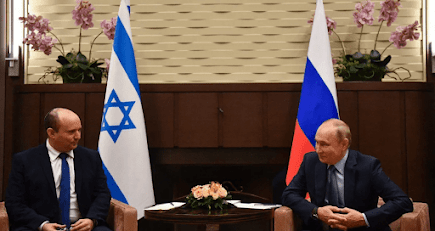
Western hypocrisy is ever-present as we see differing responses to the annexation of land by Russia in Ukraine in comparison to Israel’s continued annexation of Palestinian land since 1947. Russian President Vladimir Putin announced on September 30th 2022 that Russia would annexe four regions in Ukraine. These regions are Donetsk, Luhansk, Kherson, and Zaporizhzhia, now referred to as “new regions” of Russia.

The UN Secretary-General Antonio Guterres condemned the annexation as violating international law. Therefore, this is a “dangerous escalation” in the war between Russia and Ukraine, which began on February 24th 2022, when Putin ordered the invasion of Ukraine, classified as a “special military operation”. Hence, the annexation of a state’s territory by threat or use of force violates the principles in the United Nations Charter.

The European Commission rejected and unequivocally condemned the illegal annexation. However, western hypocrisy is ever-present. The international community condemns Russia’s violations but celebrates and protects those carried out by Israel. Consequently, Russia is creating a global security risk and undermining the leading principles of international law.

A “Sham Referenda” Executed by Russia in Ukraine

Between September 23rd to 27th, Russia orchestrated a “sham referendum” in regions of Ukraine. Residents voted on whether they wished to become part of Russia. The voting took place in polling centres while Russian authorities accompanied by soldiers went door-to-door with ballot boxes.  

The sham referendum occurred during an active armed conflict in Ukraine under Russian control. Therefore, this is outside Ukraine’s legal and constitutional framework and cannot be classified as a genuine expression of the popular will.

“Unilateral actions aimed to provide a veneer of legitimacy to the attempted acquisition by force by one State of another State’s territory, while claiming to represent the will of the people, cannot be regarded as legal under international law.” 

Under-Secretary-General for Political and Peacebuilding Affairs, Rosemary A. DiCarlo.

Annexation is a “formal act whereby a state proclaims its sovereignty over territory hitherto outside its domain”.

Israel Is Allowed to Annex Occupied Land, But Russia Isn’t

Russia’s war in Ukraine triggered immediate, swift condemnation by several countries and economic sanctions by the United States. Furthermore, many states have targeted Russian banks, oil refineries and military exports. There have been marathon emergency talks at the UN Security Council to deal with Russia’s aggression in Ukraine.

The EU and its member states stand united in their unwavering support for Ukraine, revealing western hypocrisy. There is strong criticism of Russia’s unprovoked and unjustified military aggression. However, it seems it is acceptable for Israel to annex occupied land, but in the case of Russia, it is not.

Israel occupied Palestinian East Jerusalem, the West Bank and Gaza Strip, the Syrian Golan Heights, and Egypt’s Sinai Peninsula. In 1967, Israel annexed approximately 70,000 dunams of West Bank land to the municipal boundaries of Jerusalem and applied Israeli law in breach of international law.

International Communities Differing Response to Israel v Russia Reveals A Western Hypocrisy of Double Standards

The Israeli occupation and annexation of Palestinian territories received a starkly different response in comparison to Russia’s annexation. The international community’s weak response encouraged the Israeli government to continue to annex occupied East Jerusalem on July 29th 1980, and the occupied Golan Heights in 1981. Israel’s breach of international law only triggered temporary international reactions. Consequently, no meaningful change was implemented, as no sanctions or threats were applied.

The West continues to give the Israeli apartheid state unconditional diplomatic, political, economic and military support. The peaceful Boycott, Divestment and Sanctions (BDS) movement against Israel has even been criminalised in some states.

The Analogy Between Russia and Israel’s Annexations of Occupied Land

Israel has gone to extreme lengths to clear the occupied land of the Palestinian people. This has been done by demolishing their homes, withdrawing residence permits and murdering innocent civilians. Palestinians living in the Gaza Strip have been held in a land, air, and sea blockade for fifteen years. Israel never declared where its borders lay and continued to expand its territory through illegal annexation alongside unjustified impunity. An estimated 62% of Palestinians living in Gaza require food assistance, and 78% of water flowing into Gaza is unfit for human consumption. Unemployment levels in Gaza are among the world’s highest, currently at 46.6%. Youth unemployment between the ages of 15-29 for the same period stands at 62.5%.

Ironically, Israel condemned Russia’s annexation. Israel sent humanitarian aid to Ukraine and expressed its support. However, Israel did not join international sanctions against Russia and refused to give Kyiv anti-missile systems to help counter Russian attacks. The Israeli government’s fumbled response to Russia’s annexation of Ukraine betrays Jewish history and draws attention to Israel’s similarly odious actions. Israel’s brutal annexation of Palestinian territory has been continuing without consequences for a significantly longer time with little consequences.

Comparatively, Russia has annexed four regions of Ukraine that are partially or almost entirely occupied by Russia. With a complete disregard for international law, on September 30th 2022, Putin signed treaties to begin absorbing parts of Ukraine into Russia. Together with Crimea, which Russia annexed in 2014, Russia now claims 20% of Ukrainian territory.

Ukrainian Map vs Palestinian Map of Annexations

In comparison, the map below depicts the land forcibly annexed by Israel from Palestinians from 1946 onwards. This annexation was accompanied by the expulsion of 750,000 – one million Palestinians to make way for a Jewish state following World War ll.

Concluding Thoughts: The Undeniable Parallel Between Russia and Israel

Russia continues to deny Ukraine their right to independence, sovereignty and territorial integrity. These are the core principles enshrined under the UN Charter. Similarly, Isreal continues to deny the Palestinian people the same rights. However, as discussed in this article, significant differences lie in the international community’s response to both annexations.

The parallel between Putin’s invasion of Ukraine to fulfil his imperial designs, and Israel’s 70-year history of imposing its will on the Palestinians and neighbouring Arab countries, is also evidently clear worldwide.

Russia and Israel conquered and absorbed the territories of Ukraine and Palestine in defiance of international law. Both states are facing investigations over alleged war crimes at the International Criminal Court and are demanding that their enemies bow to them or face destruction. Both Russia and Israel created powerful militaries to accomplish these goals. However, another striking observation is that no amount of ammunition can subjugate a population that refuses to be defeated or erased. There is strength in the Ukrainians and Palestinians, which cannot be destroyed.

We must acknowledge the western hypocrisy concerning the international response to both wars. Both Ukrainians and Palestinians deserve our unwavering and equal support. We must respect and preserve the integrity of international law

Israel’s Intense Practices to Uproot the Palestinians in Jerusalem

Palestinians experienced the bloodiest and most brutal year of all time in 2022. They witnessed an unprecedented increase in the number of s...